

Call Association One today to schedule a whole-home inspection or repair service. Services start at just $69.95.
Air Quality Matters to the People Inside Your Home and Your Equipment
Poor air quality can have a big impact on the members of your home. It can also affect the way your heater and air conditioner operate. Dirty filters restrict air flow and can actually decrease the air quality. It isn't a matter of if but when your filters need to be changed out.
And don't forget about the humidifier filters! Many modern Midwest homes have built-in humidifiers that help reduce dry skin and throats. These systems have their own consumable called an evaporator pad. The pad evenly absorbs water that then evaporates into your HVAC systems air flow. As it ages, it loses the ability to absorb water, reducing its effectiveness at adding moisture to your heated air.
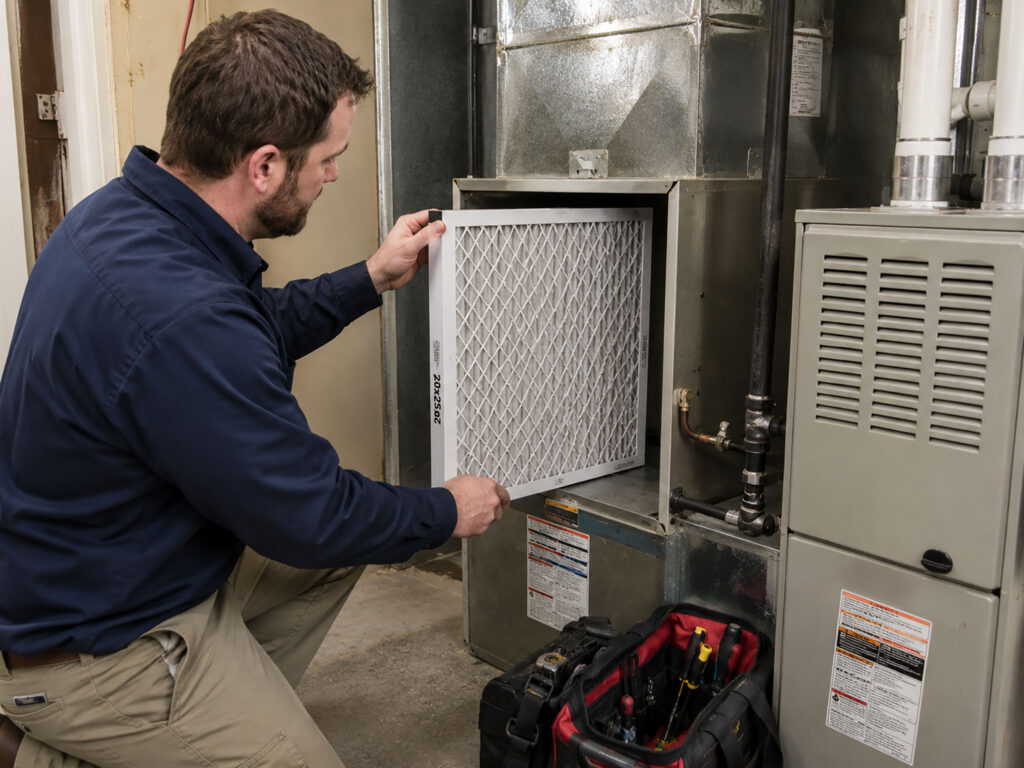
Association One can inspect and replace your air filters and evaporator pads in a single visit.
Every visit is handled start to finish by an Association One technician.
- Filter locate and inspect. We find the filter slot, wherever your system has it, and check the current filter against what's actually due for replacement.
- Correct filter, correct orientation. We install a filter matched to your equipment, oriented the right direction so airflow moves through it the way it's designed to.
- MERV rating matched to your system. We use a rating your specific furnace and blower can actually handle. Higher isn't automatically better, and we won't put in a filter that restricts airflow and strains your equipment.
- Humidifier pad replacement. We shut off the water supply, replace the pad on schedule, and confirm the unit is feeding water properly before we button it back up.
- Humidistat check. We check the setting against the season and adjust it if it's overcompensating in either direction.
Recommended Replacement Intervals
- Standard 1-inch filters. Every 30 to 60 days during heating season.
- Pleated or higher-capacity filters. Every 90 days, or per manufacturer guidance.
- Media filters (4 to 5 inch). Every 6 to 12 months, since they hold more capacity.
- Humidifier pad or filter. At the start of heating season, then again mid-season. Homes with harder water may need it more often.
Households with pets or allergy concerns should check filters more often than the standard interval, regardless of filter type.
What We Catch That Homeowners Often Miss
- Wrong MERV rating. A high-MERV filter rated for a system that isn't designed for it restricts airflow, strains the blower motor, and can shorten equipment life. We match the rating to your equipment instead of just grabbing the highest number on the shelf.
- Installed backward. The airflow direction arrow matters, and it's an easy thing to get wrong. We double-check orientation on every install.
- A forgotten humidifier. It's easy to remember the furnace filter and forget the humidifier pad sitting right next to it, quietly not doing its job. We service both in the same visit so neither gets skipped.
- A humidistat left on the wrong setting. Left on a summer setting through winter, or vice versa, it leads to window condensation, dry static-prone air, or worse. We check it every visit rather than assuming last season's setting is still right.
FAQs About Furnace Filters and Humidifier Pads
Portable and console humidifiers have their own filters or wicks that need regular cleaning and replacement too, on a similar seasonal schedule.
Higher energy bills, longer heating cycles, visible dust buildup on the filter surface, and reduced airflow from vents are the main signs. Checking monthly is the safest habit, even if you’re on a longer replacement schedule.
Every 30 to 45 days is a common recommendation for homes with pets, since pet hair and dander clog standard filters faster.
The system works harder to pull air through a clogged filter, which raises energy costs and puts extra strain on the blower motor. In some cases it can trigger the system to shut down as a safety measure.
It depends on your specific furnace and blower. Many residential systems are built for MERV 8 to 13. Higher ratings can restrict airflow on equipment not designed to handle them. Check your owner’s manual or ask before upgrading.
What Our Homeowners Think About Association One





Keep the Air Moving Right
One visit handles the furnace filter, the humidifier pad, and the settings that go with both.