

Call Association One today to schedule a whole-home inspection or repair service. Services start at just $69.95.
Routine refills so the system keeps working the way it should.
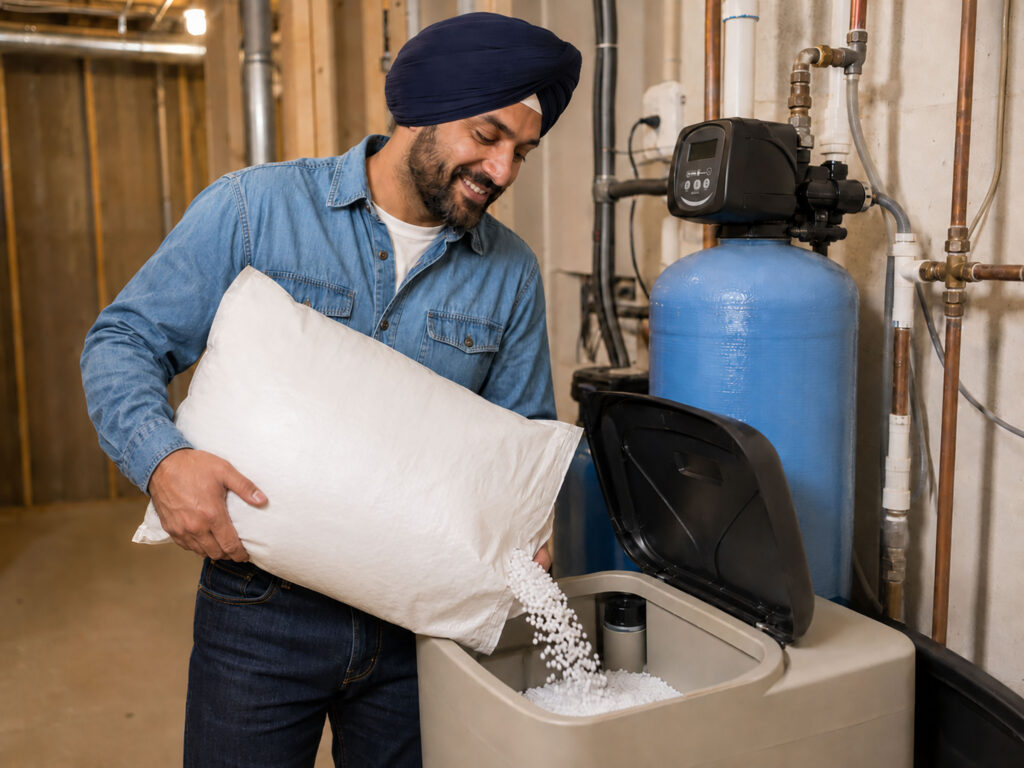
Association One handles salt refills as part of our home maintenance services for homeowners in our managed communities and beyond. No hauling 40-pound bags. And with regular scheduling, there is no guessing as to how low your tank is on salt.
What's Included in the Service
Every visit is handled start to finish by an Association One technician. Here's what that looks like.
- Tank check. We open the brine tank and check the salt level against the water line, not just a glance to see if it "looks full."
- Bridging inspection. We check for hard crust that's formed above the waterline. A tank that looks full can still be bridged and feeding zero salt into the system, so we break it up before adding more.
- The right salt, every time. We bring pellet or crystal softener salt rated for your specific system. Never rock salt, never ice-melt salt, and never whatever happened to be on sale.
- Proper refill. We fill to the manufacturer's recommended level, not the top of the tank. Overfilling causes its own problems.
- A quick system check. While we're there, we check for signs the softener itself needs attention beyond salt, so a small issue doesn't turn into a bigger one before your next visit.
No hauling bags. No guessing whether the crust in the tank is a problem. We handle it and let you know if anything else needs a closer look.
Recommended Refill Interval
Check your salt level monthly. Most households refill every 6 to 8 weeks, though it depends on household size, water usage, and how hard your water is to start with.
Keep the tank at least one-third full. Letting it run empty means hard water flows through the house untreated until someone notices, which is usually after the spots and scale show up.
What We Catch That Homeowners Often Miss
- Salt bridging. A hard crust forms above the waterline, and the tank looks full when it's actually not feeding salt into the system at all. This is the single most common reason a softener "randomly" stops working, and it's easy to miss if you're not checking below the surface.
- Salt mushing. Low-quality salt or too much moisture in the tank can create a sludge at the bottom that clogs the system. Costlier to clean out than to prevent, which is why we check for it every visit.
- Wrong salt type. Using the wrong pellet type, or worse, non-softener salt, can damage the resin bed over time. We make sure that never happens.
- A regeneration cycle that needs adjusting. If your water is still coming out hard despite a full tank, that's often a sign the softener's cycle needs adjusting, not just more salt. We flag it instead of just topping off the tank and moving on.
FAQs About Water Softener Salt
It won’t damage the unit directly, but it does mean your water isn’t being softened even though the tank looks full. Left unaddressed long enough, the mineral buildup downstream can affect pipes and appliances.
Association One handles the whole visit, including sourcing and adding the right salt for your system, as part of our home maintenance service.
Check the tank monthly. If the salt level is low, or if you notice hard water symptoms like spots on dishes, dry skin, or reduced soap lather, it’s time to check the tank even if you haven’t hit your usual refill date.
Most households refill every 6 to 8 weeks, but homes with harder water and larger households often need it more frequently. Monthly checks are the safest habit.
Pellet or crystal salt made specifically for water softeners. Solar salt and evaporated salt both work well. Avoid rock salt, which contains more impurities and can clog the system faster.
What Our Homeowners Think About Association One





Ready to Book a Service Call?
One call keeps the salt topped off and the guesswork out of it.