

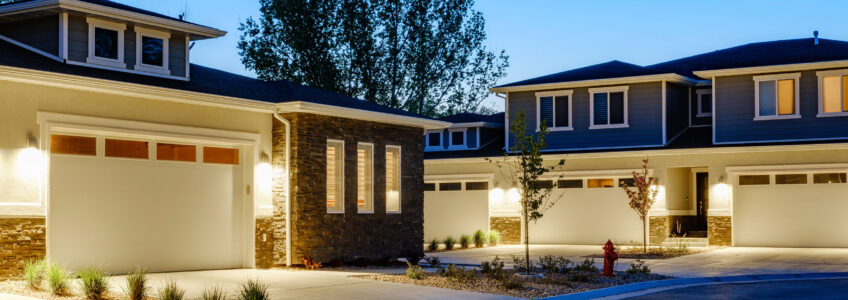
An HOA exterior lighting checklist helps your board find dark spots before residents start coming home after sunset. By November, many people leave for work and return in the dark. Bright paths, doors, and lots help people avoid falls. They also make the whole place feel safer.
This guide is part of our HOA fall maintenance checklist series.
Do a Night Walk
Lighting problems are hard to spot during the day. Walk the property after dark with a flashlight and a site map. Follow the routes residents actually use, from parking spots to front doors and mailboxes. Mark every dark stretch and every fixture that's out.
Areas to Check
- Walkways and paths. Every stretch should be lit from end to end.
- Stairs and ramps. Each step should be easy to see.
- Building entrances. Doors, entry gates, and vestibules.
- Parking areas. Lots, garages, and guest spots.
- Mailbox stations. Residents should be able to read keys and labels.
- Trash enclosures. People use these at night more than you'd think.
- Amenities. Clubhouse entries, pool gates, and playground paths.
- Signs. Entry monuments and address signs that guests and first responders rely on.
Common Problems to Fix
- Burnt-out bulbs. Replace them all at once if several are near the end of their life.
- Flickering fixtures. These often point to wiring or ballast problems.
- Broken lenses. Cracked covers let in water and bugs.
- Dirty sensors. Light sensors caked with dirt or leaves may keep lights off.
- Blocked light. Overgrown trees and shrubs can hide a working fixture.
Blocked fixtures are easy to miss. Add them to your fall pruning list. Our guide to HOA fall leaf removal and landscaping covers pruning with your vendor.
Reset Timers When Daylight Saving Time Ends
Daylight saving time ends on the first Sunday in November. Lights on simple timers may now turn on an hour too late. Reset them that week.
You can also skip the reset for good. A light sensor turns lights on when it gets dark. A smart timer shifts with the sunset all year. Either one means no more clock changes twice a year.
Consider LED Upgrades
If your community still uses older bulbs, fall is a good time to price out LEDs. The U.S. Department of Energy says LEDs use far less power and last much longer than old bulbs. Longer life means fewer service calls and fewer dark spots between visits.
A few tips when choosing fixtures:
- Warm color. Softer, warmer light is easier on the eyes at night.
- Shielded fixtures. These aim light down instead of into bedroom windows.
- Even coverage. Avoid bright spots next to deep shadows.
Know Who Owns Each Light
Some lights may not be yours to fix. Lights on a unit may be the owner's job. Some street lights are owned by the city or the power company. Check your governing documents, then make a simple map that shows who handles each light. Report city or utility lights to the right office as soon as they go out.
Plan for Snow
Light poles near driveways and parking lots get hit by plows every winter. Mark them with stakes or reflectors before the first snow. Ask your snow removal vendor to note pole locations on their route map.
Get Help Keeping Your Community Well Lit
Association One tracks light problems and books repairs for the communities we manage. We work with electricians and the power company too. Residents report a dark spot in one place, and our team follows up until the light is back on.
Or call 1 (833) 737-8663 to talk with our team.