

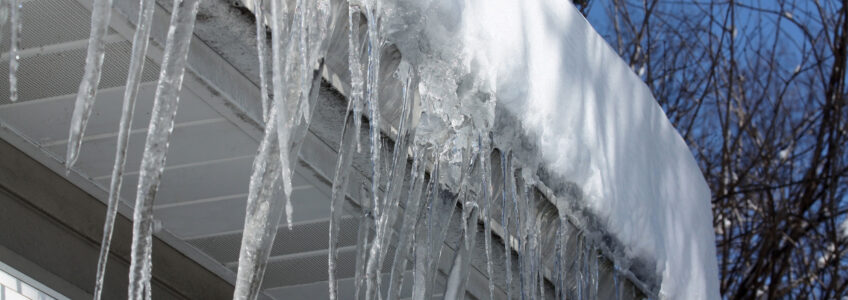
HOA ice dam prevention starts in the fall, long before the first icicle shows up. Clear gutters, well-placed downspouts, and open drains keep meltwater moving off roofs and away from buildings. When water can't drain, it freezes in the wrong places. That leads to roof leaks, icy walkways, and damage that often shows up months later.
This guide is part of our HOA fall maintenance checklist series.
How Ice Dams Form
An ice dam is a ridge of ice along the edge of a roof. It forms when heat from inside the building warms the roof and melts the snow on top. The water runs down to the colder roof edge and freezes again. Over time, the ice builds up and traps more water behind it. That water can work its way under shingles and into ceilings and walls.
Clogged gutters make the problem worse because they hold water and ice right at the roof edge. But the main cause is heat escaping through the attic. The University of Minnesota Extension has a helpful guide on what causes ice dams and how to prevent them.
So your fall plan needs two parts: keep water moving, and find the roofs that lose too much heat.
Clean Gutters After the Leaves Come Down
Timing counts. Gutters cleaned in early October can fill right back up. Schedule the main cleaning after most trees are bare. In wooded areas, plan a second pass.
While the crew is on the ladder, ask them to check for:
- Sagging runs. Gutters that hold standing water.
- Loose hangers. Brackets pulling away from the fascia.
- Leaky seams. Drips at corners and joints.
- Damaged guards. Gutter guards that are bent or packed with debris.
Point Downspouts Away From Buildings
A clean gutter only helps if the water has somewhere to go. Downspouts that dump next to a foundation create puddles. Those puddles freeze into slick spots on walks and drives. They can also lead to basement leaks.
- Extensions. Make sure each downspout carries water several feet away from the building.
- Splash blocks. Replace any that are missing, cracked, or tipped toward the house.
- Underground drains. Run water through buried lines to make sure they flow freely.
Clear Storm Drains and Low Spots
Look past the buildings too. Leaves and debris collect in drain grates, catch basins, and swales. A blocked drain sends water across roads and sidewalks, where it freezes overnight.
- Drain grates. Clear leaves and trash from every one.
- Catch basins. Check for buildup and schedule cleaning if needed.
- Swales and ditches. Remove debris so water can flow.
Walk the property during a steady rain if you can. You'll see where water actually goes. Mark any spot where it pools. Those are the places that turn into ice sheets in winter. Some may need regrading next spring.
Check Roofs and Attics, Too
Gutters and drains handle the water. The roof and attic decide how much melting happens in the first place. Ask residents where they saw ice dams or big icicles last winter. Those buildings should go to the top of your list.
A roofer or energy auditor can check for:
- Thin insulation. Not enough to keep heat from reaching the roof.
- Air leaks. Gaps around lights, vents, and attic hatches.
- Poor ventilation. Attics that trap warm, moist air.
These fixes cost more than gutter cleaning, so they may belong in next year's budget. Fall is a good time to get them on the list.
Know Who Is Responsible
Responsibility for roofs, gutters, and attics varies from one community to the next. In some, the association handles all of it. In others, owners maintain their own units. Check your governing documents before scheduling work. If owners are responsible, send a reminder about fall gutter cleaning.
Have a Winter Plan Ready
Even with good prep, a heavy snow year can bring ice dams. Decide now:
- Who removes roof snow. Use a trained vendor, not residents on ladders.
- Who residents call. Share the number for reporting leaks.
- How fast you respond. Set clear steps for urgent water damage.
Your fall HOA property inspection is a good time to spot gutter and drainage problems before they turn into winter emergencies.
Get Help Protecting Your Buildings This Winter
Association One coordinates gutter cleaning, drainage repairs, and roofing vendors for the communities we manage. We also track which buildings had problems last winter, so prevention starts in the right places.
Or call 1 (833) 737-8663 to talk with our team.