

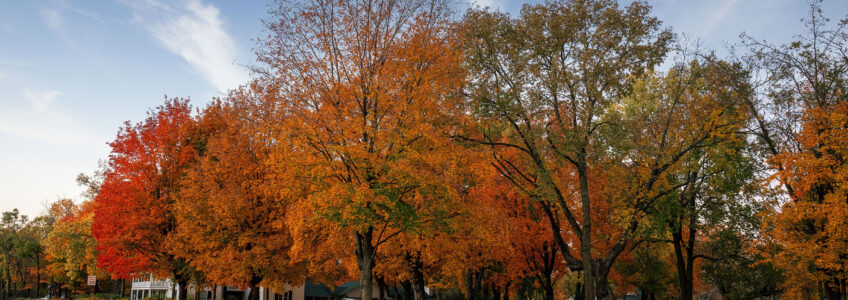
Good HOA fall leaf removal starts with a plan, made with your landscape vendor before the first leaves drop. Leaves come down over several weeks. A single cleanup day rarely covers it. When boards agree on the schedule early, common areas stay neat and nothing gets buried under the first snow.
Plan for More Than One Visit
Trees drop leaves at different times. Maples often go early. Oaks can hold their leaves into late fall. A cleanup in mid-October may look great for a week, then disappear under a fresh layer.
Most communities need at least two or three passes. Ask your vendor to save the final cleanup until most trees are bare. That last visit also clears leaves out of gutters, beds, and drains before winter.
What to Confirm With Your Vendor
Read your contract before fall starts. Then confirm these details in writing:
- Number of visits. How many leaf cleanups are included, and when.
- Areas covered. Lawns, beds, curbs, parking lots, and drain grates.
- Removal method. Whether leaves get hauled away or mulched in place.
- Early snow. What happens if snow falls before the final cleanup.
- Extra visits. The cost of an added pass if the season runs long.
Also make clear which areas belong to the association and which belong to owners. Vendors can't clean what they don't know they're responsible for.
Mulch or Haul Away?
Both work, depending on how many leaves you have.
- Light layers. A mower can chop leaves into small pieces and leave them on the lawn. They break down over the winter.
- Heavy layers. Thick, wet mats can smother grass. These should be raked or blown up and hauled away.
Ask your vendor which approach fits each part of the property. Wooded areas may need hauling. Open lawns may do fine with mulching.
Keep Leaves Out of Streets and Storm Drains
Leaves in the street don't stay there. Rain carries them into storm drains, which often flow straight to nearby ponds and lakes. As they break down, they release nutrients that feed algae.
Research from the U.S. Geological Survey found that leaves are a major source of phosphorus in city stormwater. Timely leaf pickup and street cleaning cut those levels in a big way.
Ask your vendor not to blow leaves into private roads or onto curbs. Clear drain grates during each visit. Clean drains also prevent puddles that turn into ice later. For more on that, see our guide to HOA ice dam prevention and drainage.
Finish the Rest of the Fall Yard Work
Leaf cleanup is one piece of the season. Make sure your vendor also covers:
- Final mowing. One last cut at the right height before winter.
- Pruning. Trimming shrubs and small trees away from roofs, lights, and walkways.
- Bed cleanup. Cutting back plants and clearing debris.
- Sprinkler shutdown. Blowing out irrigation lines before the first hard freeze.
- Young trees. Wrapping trunks to protect them from rodents and winter sun.
Some trees are best pruned in late winter while they're dormant. Your vendor or a certified arborist can tell you which ones should wait.
Tell Residents the Plan
Share the leaf schedule in your newsletter or on the resident portal. A few simple requests help the crew work faster:
- Move cars. Keep vehicles off curbs and lots on cleanup days.
- Skip the dumping. Don't rake owner leaves onto common areas or into the street.
- Report problems. Let the manager know about clogged drains or missed spots.
Get Help Managing Your Landscape Vendor
Association One works with landscape vendors every fall. We confirm schedules, check the work, and follow up when something gets missed, so your board doesn't have to chase it down.
Or call 1 (833) 737-8663 to talk with our team.